
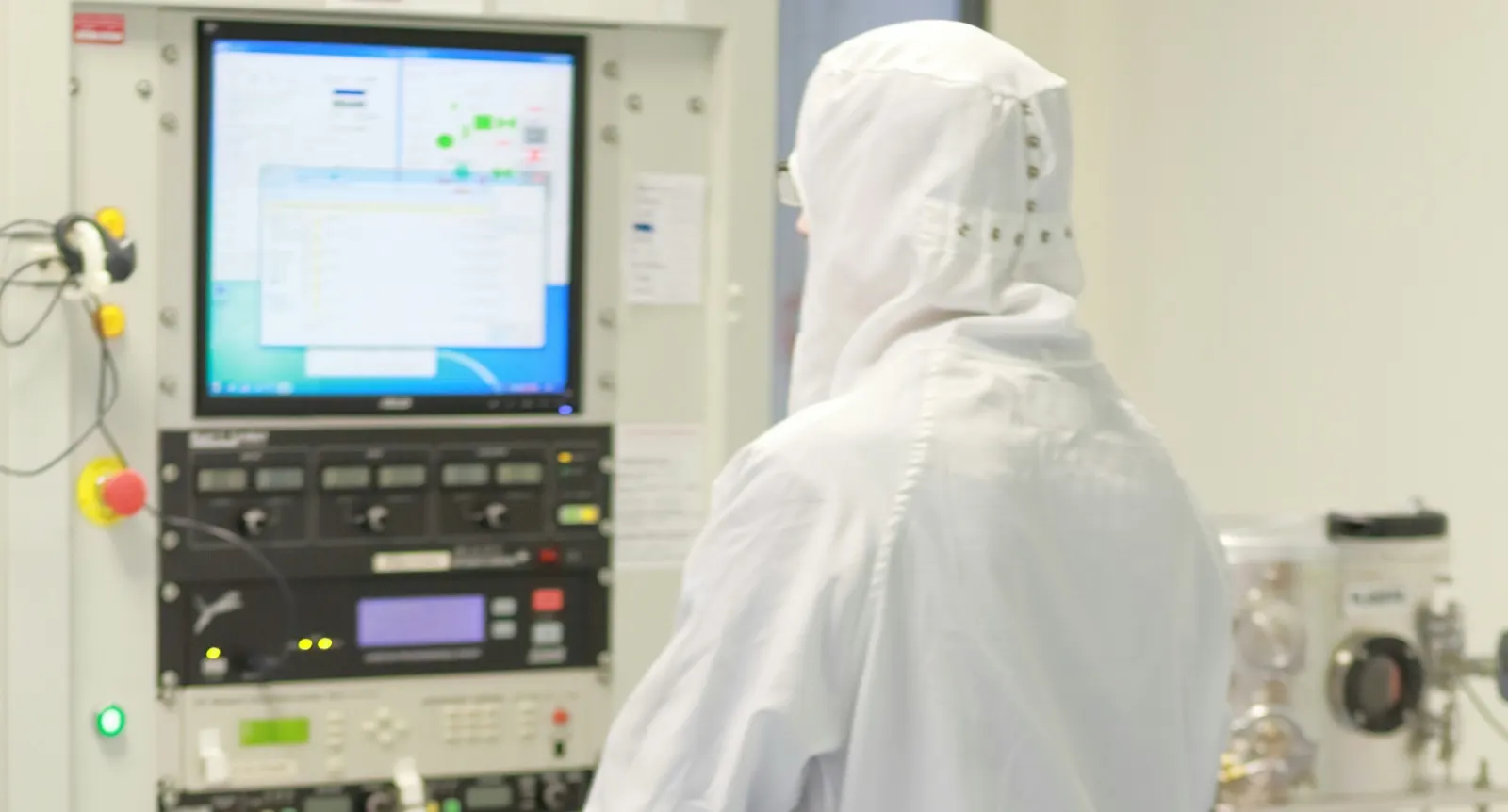
Cleanliness classes: the basics of cleanroom design
Cleanroom cleanliness is managed using the ISO Class 1 to ISO Class 9 scale defined in the international standard ISO 14644-1 (in Japan, JIS B 9920 follows the same standard). The lower the number, the higher the cleanliness. Semiconductor front-end processes typically call for something around ISO Class 5, while back-end and assembly processes generally require ISO Class 7 to 8.
The key design parameter for maintaining a cleanliness class is the air change rate, meaning how many times per hour the air in the room is replaced. A higher air change rate makes cleanliness easier to hold, but it also raises both the construction cost of the HVAC system and the electricity cost of running it.
Why so many projects end up overspecified
For a required cleanliness class, design guidelines give a recommended range for the air change rate. In practice, however, many design teams simply adopt the upper end of that range. This is a decision made on the side of safety, but it frequently exceeds the air change rate actually needed, and it is the kind of design judgment that readily generates waste in both construction cost and electricity cost.
A mathematical modeling approach to optimization
At Mathematical Physics Labo we model the relationship between particle sources in the room, airflow patterns, and the cleanliness class, and from that we calculate the air change rate and number of purifiers that are necessary and sufficient to achieve the target cleanliness. The aim is to remove overspecification without compromising yield.
This analytical approach applies methods for modeling airflow and particle behavior that the director developed through particle physics research at Fermilab (Fermi National Accelerator Laboratory) and SLAC (Stanford Linear Accelerator Center). What characterizes it is that design values are derived from a quantitative model rather than from intuition or rules of thumb.
In practice: 68% lower cost than a major contractor's estimate
In work carried out as technical advice to the parties involved, a recalculation using mathematical modeling was applied to the air change rate and equipment count quoted by a major general contractor, and construction cost was reduced by 68%. That figure came from identifying precisely which parts of the specification were excessive while still meeting the required cleanliness class.
How to start a conversation
"We are not sure whether our current design is excessive." "We cannot judge whether this quotation is reasonable." Inquiries at that stage are very welcome. Mathematical Physics Labo works from sound mathematical models to propose designs that hold cleanliness and operating cost together.